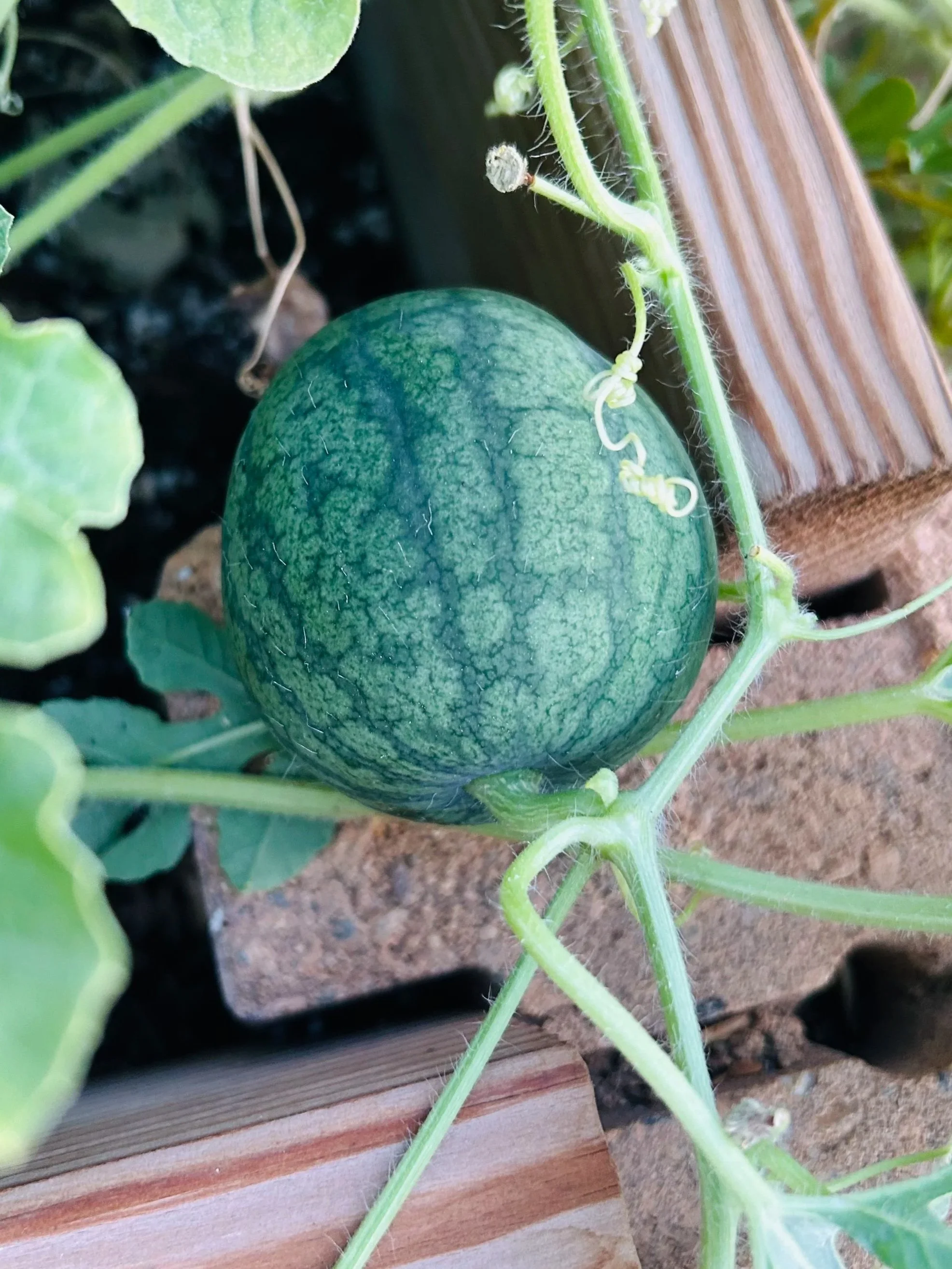
Watermelon
-
Congratulations on your new Sugar Baby watermelon plant! Your first priority is getting it into the ground — ideally within 3 days of bringing it home. The sooner it’s established, the better your chances of a good harvest before the Phoenix summer heat arrives.
Please note that this guide covers small and personal size watermelon varieties including Sugar Baby.
Sugar Baby watermelons need lots of space and can spread 6–8 feet in all directions. You can plant it in a garden bed if the bed is dedicated to watermelon only. In a shared bed, plant it at the end or in a corner so the vines can spill over the edge — otherwise it will quickly take over and crowd out other plants.
If growing in a container, use at least a 15–20 gallon pot (18" wide and deep). Anything smaller will limit root growth and reduce your harvest.
You can also plant using the method from Dave Owens in Extreme Gardening: dig a 1' x 1' hole in native soil and fill it with compost and garden soil. This creates a rich planting pocket that helps roots establish quickly while still growing outward.
-
Sugar Baby watermelons are one of the most heat-tolerant crops you can grow in Phoenix. They thrive in temperatures between 80–100°F and can handle even hotter days once established.
-
FULL SUN — MORE IS BETTER
Watermelons love heat and thrive in the strongest Phoenix sun, especially in spring and early summer. Full sun — ideally all day — is perfect for establishing healthy vines and producing sweet fruit. They handle high temperatures well, making them one of the most reliable warm-season crops here.During extreme heat (110°F+), Leaves will scorch, fruit can sunburn, and vines may slow down, so taking care of the soil and moisture is key.
March–May → full sun all day (perfect)
June–August → still full sun, but soil and watering matter a lot. Afternoon shade is recommended.
-
FIRST 4–5 DAYS AFTER TRANSPLANTING
Water deeply every single day right after planting to help the roots recover from transplant stress and get firmly established. Don't skip a day during this window — even heat-tolerant watermelons need consistent moisture to get a strong start.
ONGOING CARE
Once established, water deeply every 2–3 days. Watermelons have deep roots and prefer less frequent but deeper watering over frequent shallow watering. Check 3–4 inches down — if dry, it's time to water.Always water at the base of the plant in the early morning or late evening.
-
RECOMMENDED SOIL MIX
For best results, use a blend of potting soil (or garden soil), compost, and an aeration material. The potting soil provides a nutrient-rich base, the compost feeds the plant and helps retain moisture, and the aeration keeps roots from sitting wet.Ideal mix:
• 50% potting soil or garden soil
• 30% compost
• 20% coarse sand, pumice, or perliteThis creates loose, well-draining soil that still holds enough moisture for watermelon roots. If planting in native soil, you can also use the method from Dave Owens in Extreme Gardening — dig a 1' x 1' hole and fill it with this mix to create a rich planting pocket.
MULCH
A light layer of mulch around the base is recommended to retain moisture and keep soil temperatures from getting too extreme. Keep mulch pulled back slightly from the main stem (about 1–2 inches) to prevent rot. -
Good neighbors: sunflowers, and marigolds, — they will attract beneficial pollinators.
Bad neighbor: cucumbers, squash, pumpkins — planting too close together encourages shared pests and diseases.
-
Let your Sugar Baby watermelon do what comes naturally — spread out on the ground with room to roam. No trellis needed.
If you prefer to grow vertically, you will need to create a sling for each fruit using old pantyhose or a mesh bag tied to the trellis — without it the weight of the fruit will pull it off the vine before it's ripe.
-
Male flowers appear first — don't be alarmed when the first flowers don't set fruit. Male flowers show up a week before female flowers and that's completely normal.
Female flowers have a tiny baby watermelon at the base — once you see those and bees start visiting, fruit will begin to set and develop.
Pollinators are essential — watermelons need bees to transfer pollen from male to female flowers. Planting flowers nearby to attract bees and beneficial pollinators will significantly improve your fruit set.
-
Sugar Baby watermelons are ready in 75–80 days from transplanting — planting in April puts your harvest right around late June to early July.
Check the tendril nearest the fruit — when it turns brown and dries out, the watermelon is ripe and ready to pick. This is the most reliable indicator. Not sure what to look for? Head over to our Instagram @desertharvest_az and look for our video 'When to harvest watermelon' — it walks you through how to check the tendril step by step so you can harvest with confidence.
Look for a yellow ground spot — the patch where the watermelon rests on the soil should turn from white to a creamy yellow when ripe.
Give it a tap — a ripe watermelon produces a deep, hollow thud rather than a high-pitched ping. It takes a little practice but becomes second nature quickly.
Cut the fruit from the vine with a sharp knife — never pull or twist as this can damage the vine and any remaining developing fruit.