Tomatoes
-
Congratulations on your new cherry tomato plant! Your first priority is getting it into the ground — try to plant it within 3 days of bringing it home. The sooner it's established, the better your chances of a strong harvest before Phoenix summer arrives.
Cherry tomatoes grow well in either a garden bed or a pot. If you're going the container route, use a minimum 5-gallon pot (roughly 12 inches wide and deep), though a 8 - 10-gallon pot is strongly recommended. More soil volume means more moisture retention, more nutrients, and a healthier plant — especially important in Phoenix where smaller pots heat up and dry out fast.
Unlike most plants, tomatoes should be planted deeper than they came in their pot. Bury the stem up to the lowest leaves — the buried portion will sprout new roots, helping the plant establish faster and grow stronger.
When it comes to spacing, plan for one plant per square foot. Not sure what one square foot looks like? Picture four rulers laid end to end to form a square — that's exactly one square foot, roughly the size of a standard floor tile.
-
April days (80–98°F) are perfect for tomatoes. Growth will slow above 98°F. Expect 6 weeks of good production.
When Phoenix summer kicks in and we start seeing consistent days over 100°F, your tomato plant will slow down and eventually stop fruiting — this is completely normal.
-
Morning sun, afternoon shade
Tomatoes need plenty of sun but Phoenix afternoons are brutal. Aim for east-facing placement so the plant gets strong morning sun and natural shade in the afternoon. Once temps regularly hit 99°F+, a 30–40% shade cloth is recommended. -
FIRST 3–4 DAYS AFTER TRANSPLANTING
Water deeply every day right after planting to help the roots recover from transplant stress and get established. Don't skip a day during this window — Phoenix heat can stress a newly transplanted tomato very quickly.
ONGOING CARE
Once established, water deeply every 2–3 days depending on the heat. Check 2 inches down — if the soil is dry, it's time to water. Always water in the early morning or late evening at the base of the plant. Drip irrigation is ideal. Inconsistent watering is one of the leading causes of problems like blossom end rot and cracking, so keeping a steady routine makes a big difference. -
For best results, use a blend of potting soil (garden soil), compost, and a small amount of sand. The potting soil provides a nutrient-rich base, the compost feeds the plant and improves moisture retention, and the sand helps water drain freely so roots don't sit wet.
MULCH
A light layer of mulch (straw or wood chips) over the soil surface is recommended. It helps slow moisture loss between waterings and keeps the soil from overheating in the sun. -
Good neighbors: Marigolds — repel aphids, whiteflies, and other common tomato pests naturally. A great companion in Phoenix since they also handle the heat well.
Basil — said to improve the flavor of tomatoes and repel pests.
Sunflowers — attract bees and beneficial pollinators and can provide light afternoon shade for the base of the plant.Bad neighbor: Fennel — one of the worst neighbors for tomatoes. It releases compounds that inhibit tomato growth
-
Cherry tomato plants get top-heavy with fruit and will topple without support. Use a sturdy cage, or stakes with twine to keep them upright.
If you go the cage route, invest in a good one — most tomato cages sold at garden centers are flimsy and cheaply made and simply won't hold up under the weight of a full grown plant. Don't waste money on anything that feels light or unstable.
-
Yellow flowers appear first — this is a great sign! Cherry tomatoes are self-pollinating, meaning each flower contains both male and female parts and can pollinate itself, but bees and wind help speed up the process.
-
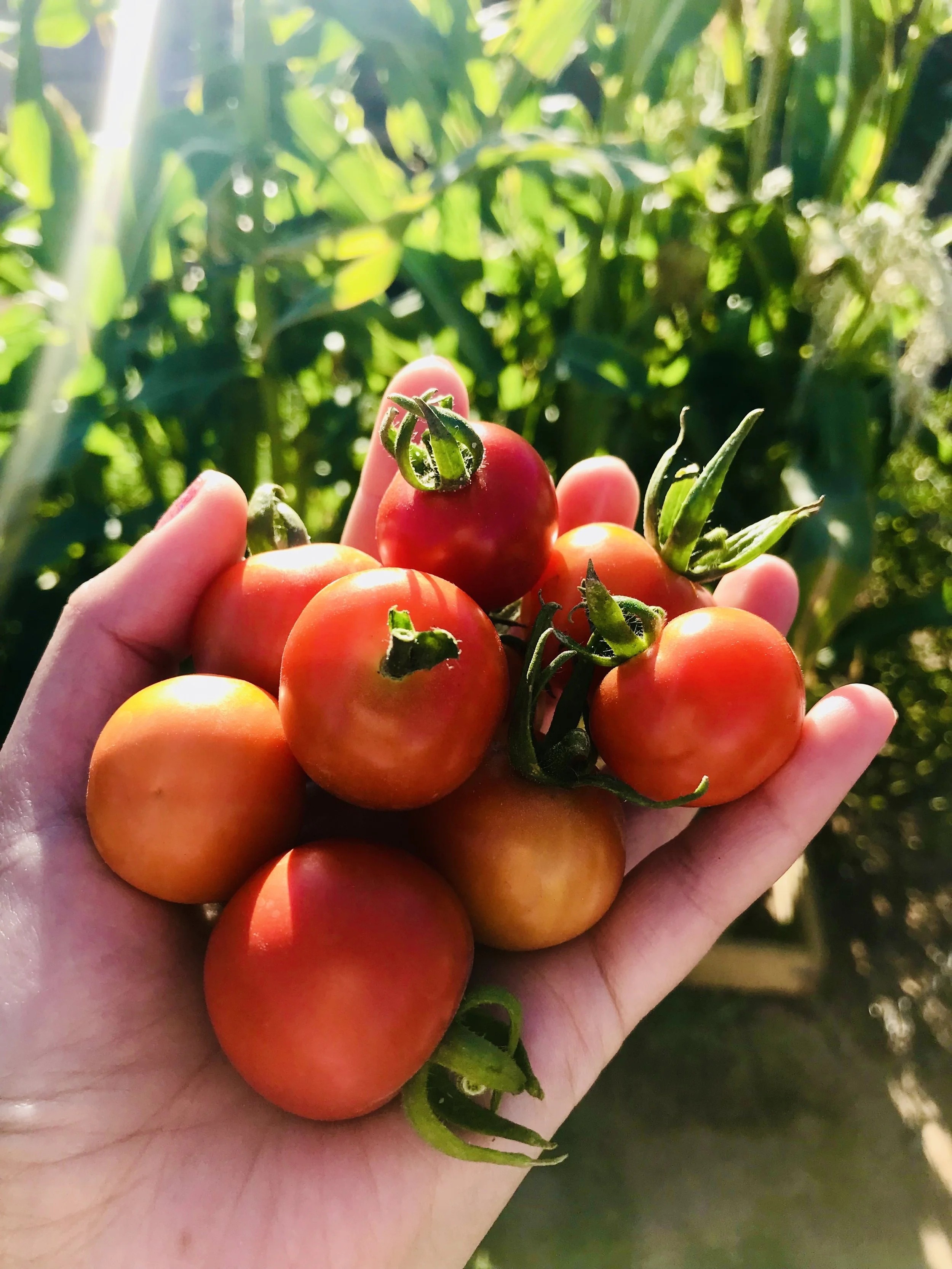
Pick when fully colored and slightly soft to the touch. Cherry tomatoes are ready when they come off the vine with a gentle tug.
Harvest often — picking regularly encourages the plant to keep producing. Don't leave ripe fruit on the vine too long, especially in the heat.
Expect fruit in 50–60 days from transplanting. Once production starts, cherry tomatoes come fast — check the plant every day or two.
After harvesting, make sure to wash your hands and arms — tomato leaves contain compounds that can make your arms itchy.