WELCOME TO YOUR HERB GARDEN KIT!
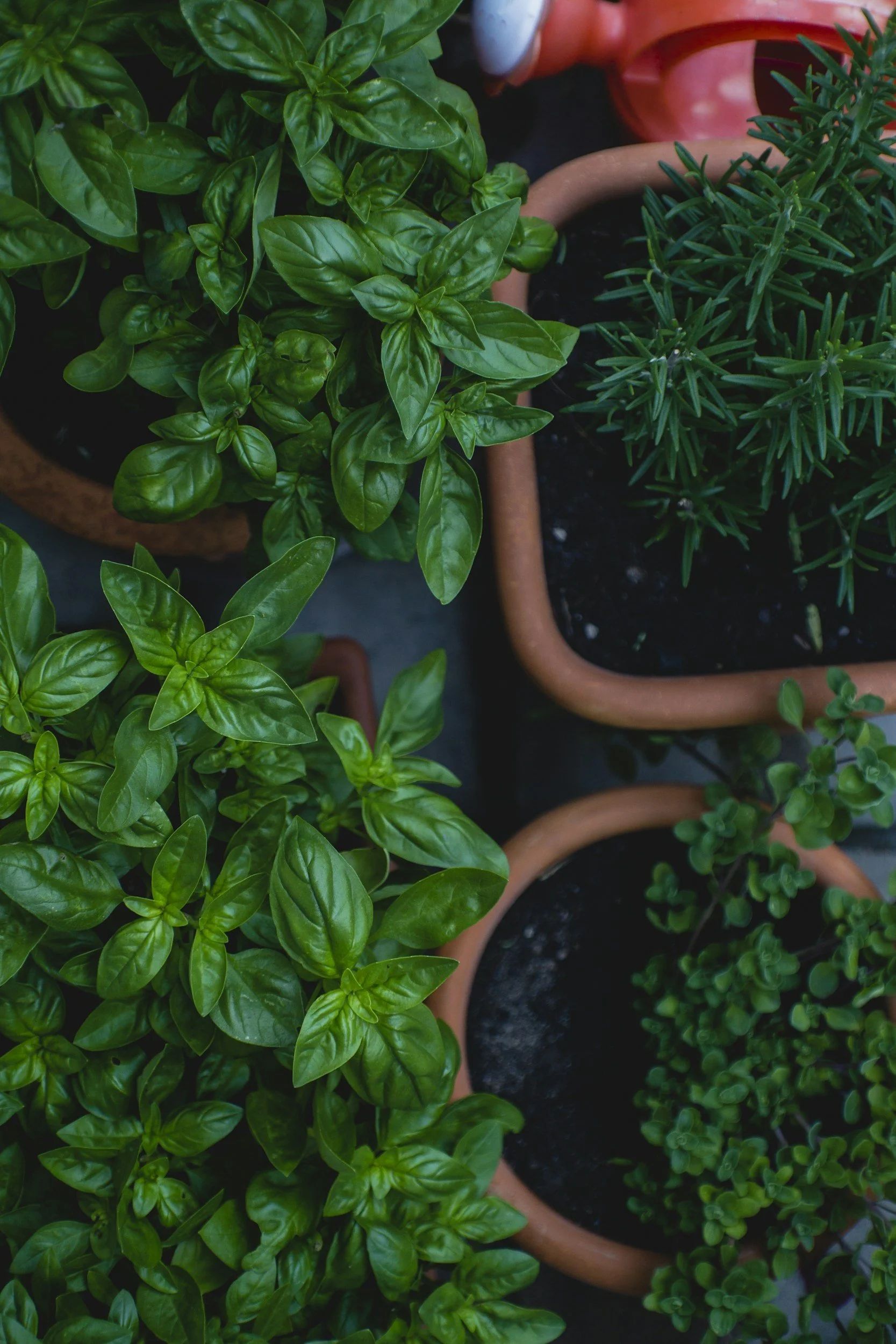
Everything you need to grow fresh basil, oregano, and rosemary right at home is included in this kit. Whether this is your very first time growing anything or you have been gardening for years, this guide will walk you through every step from planting your seeds all the way to harvesting your first fresh herbs.
-
This kit is designed to be grown outside on your patio where your herbs will thrive in fresh air and natural sunlight. Position your planter where it will get at least 5 hours of sun per day — a east facing spot is ideal for Phoenix.
When temperatures are forecast to exceed 108°F bring your planter inside and place it on a south-facing window to protect your herbs from the extreme heat. Once temperatures drop back to a comfortable range move them back outside.
Use the hand trowel from your kit to fill the planter with your personalized soil mix, leaving about two inches of space at the top.
The soil in this kit has been specially formulated to give your herbs the perfect foundation — it has the right balance of nutrients, drainage, and moisture retention to support healthy growth in our desert climate.
-
Each herb has slightly different planting needs — here is exactly what to do for each one.
Before you start, divide your planter into 3 equal sections — one for each herb. Use your plant labels to mark each section so you always know what is growing where.
BASIL - Plant seeds ¼ inch deep and about 3 inches apart. Basil germinates quickly in warm soil — expect seedlings in 5–7 days.
OREGANO - Sprinkle seeds on the surface and press gently into the soil — oregano seeds need light to start to grow so do not cover them deeply. Expect seedlings in 7–12 days.
ROSEMARY - Plant seeds ¼ inch deep. Rosemary is the slowest of the three to grow — be patient and expect seedlings in 12–18 days.
-
Give your seeds their first watering using the watering can included in your kit. Water gently and evenly across the entire planter — you want the soil to be moist but not waterlogged.
Continue to water gently every day for the next 4 to 5 days — this consistent moisture is essential for encouraging your seeds to wake up and sprout.
Keep the soil consistently moist — not wet — until seedlings appear
Once Seedlings Appear - Water when the top inch of soil feels dry to the touch. Herbs prefer to dry out slightly between waterings. When in doubt, underwater rather than overwater — the most common mistake with herbs is overwatering.
-
Place your planter where it gets morning sun and afternoon shade — especially important in summer.
A covered patio or spot that gets shade after 1pm is ideal. Avoid placing the planter on surfaces that absorb and radiate heat like concrete or dark metal railings as this can overheat the roots.
-
Once your seedlings are about 2 inches tall you may notice them growing close together — this is normal. Use your needle point pruners to thin them out by snipping the weakest seedlings at soil level, leaving the strongest ones with room to grow.
This feels counterintuitive at first but giving each plant enough space makes a huge difference in how healthy and productive they become.
For the window planter, aim for 2 - 3 basil plants, 2–3 oregano plants, and 2 rosemary plant once thinned.
-
Your personalized soil mix already contains nutrients to get your herbs off to a great start — no feeding needed.
-
The golden rule of herb harvesting: Harvest little and often. Regular harvesting encourages the plant to keep producing fresh growth — the more you harvest the more it grows. Use your needle point pruners for clean precise cuts that keep your plants healthy and looking great.
Basil - Ready to harvest in 3–4 weeks after seedlings appear. Always harvest from the top down, cutting just above a set of leaves. Never remove more than a third of the plant at once.
Oregano - Ready to harvest in 5–7 weeks. Flavor is strongest just before flowering. Snip stems from the top right above a node and use fresh or dry for later use.
ROSEMARY - Ready to harvest in 7–11 weeks. Snip young tender stems from the tips right above a node to encourage more growth. Avoid cutting into old woody growth.
*Important
As your herbs grow and mature they will eventually outgrow the planter provided and will need to be transplanted into larger pots or a garden bed to continue thriving. This is a sign that your herbs are healthy and doing well — think of it as a graduation moment for your plants!The best part about basil, oregano, and rosemary is that they can all be propagated again and again from cuttings — meaning once you have these three herbs you will never need to buy them again. Each plant can produce new plants for years to come, making this kit a gift that truly keeps on giving.
To learn how to propagate your herbs step by step, head over to our Instagram @desertharvest_az where we walk you through the entire process so you can keep growing your herb garden for free.